Missing!
Northeast Florida Land Buyer Guide
Putnam County & St. Johns County, Florida
Zoning, Wetlands, Taxes, and Rural Property Considerations
Buying land in Northeast Florida offers unique opportunities for building homes, starting farms, owning horse property, or investing in rural acreage. However, purchasing land involves additional considerations compared with buying an existing home. Zoning regulations, wetlands, access, taxes, utilities, and development rules all play an important role in determining how land can be used.
This guide provides an overview of key factors buyers should understand when purchasing land in Putnam County and St. Johns County, Florida.
 Understanding Zoning
Zoning determines how land can legally be used. Before purchasing property, buyers should confirm the zoning classification with the county planning department.
Putnam County Zoning
The most common rural zoning districts in Putnam County include:
Agricultural (AG)
The Agricultural district is designed to preserve rural land and support farming, forestry, and livestock operations.
Typical uses include:
Farming and crop production
Livestock and pasture
Silviculture (timber production)
Single-family homes
Mobile homes in certain cases
Agricultural accessory structures such as barns, sheds, and equipment buildings
Agricultural zoning helps maintain rural character while preventing incompatible urban development.
Residential Zoning
Putnam County also includes several residential zoning categories.
R-1 Residential
Site-built homes allowed
Mobile homes typically not allowed
R-2 Residential
Site-built homes
Modular homes
Mobile homes allowed
Zoning districts also establish minimum lot sizes, setbacks, and development standards.
Other Putnam County Zoning Districts
Additional zoning classifications include:
Agricultural Estate (AE)
Commercial (C-1 through C-4)
Industrial (IL / IH)
Public use districts
Manufactured home parks
A full zoning list and maps are available through the county planning department.
Zoning in St. Johns County
St. Johns County zoning is governed by its Land Development Code.
Common rural zoning districts include:
Open Rural (OR)
Designed for:
Low-density rural living
Farms and agricultural operations
Single-family homes on acreage
Agricultural-Intensive (A-I)
Allows agricultural production including:
Livestock operations
Crop farming
Agricultural buildings
Rural / Silviculture (R/S)
Intended to preserve large rural tracts for:
Timber operations
Agricultural uses
Low-density residential development
Commercial development in these rural districts is typically limited to uses that support agricultural operations.
Wetlands and Environmental Regulations
Wetlands are common throughout Florida and can significantly affect how land may be developed.
Wetlands are regulated by several agencies including:
Florida Department of Environmental Protection (FDEP)
St. Johns River Water Management District (SJRWMD)
U.S. Army Corps of Engineers
Wetlands protection laws are designed to protect water quality, wildlife habitat, and natural flood control systems.
When wetlands are present, permits may be required before:
Clearing land
Filling soil
Building structures
Altering drainage patterns
Even when wetlands are present, development may still be possible if sufficient upland areas exist.
Wetlands Delineation
A wetlands delineation identifies the exact boundary between wetlands and uplands.
In Florida, wetlands are determined based on three factors:
Vegetation
Soil characteristics
Hydrology
Environmental scientists evaluate these conditions in accordance with Florida Administrative Code standards.
A formal delineation identifies which portions of the property are wetlands and which areas may be buildable uplands.
Vegetation Indicators of Wetlands
Before hiring an environmental consultant, experienced land buyers often conduct a preliminary visual evaluation.
Certain plant species can indicate wet soil conditions.
Trees and Plants Often Found in Wetlands
Examples include:
Cypress
Red maple
Black gum
Sweetbay magnolia
Buttonbush
Pond pine
These species commonly grow in soils that remain saturated for extended periods.
Vegetation Found on Dry Upland Soils
Examples include:
Longleaf pine
Sand pine
Live oak
Turkey oak
Wiregrass
These plants typically indicate well-drained upland soils.
Vegetation alone does not determine wetlands — soil and hydrology must also be evaluated.
FEMA Flood Zones
Flood maps help determine the likelihood of flooding.
Common flood zones include:
Zone X
Low flood risk. Flood insurance is typically not required by lenders.
Zone AE
Moderate to high flood risk. Elevated construction and flood insurance may be required.
Zone A
Higher flood risk areas where elevation studies may be needed prior to construction.
Flood maps can be viewed at FEMA’s Map Service Center.
Evaluating Land Before Buying
Step-by-Step Checklist
Land purchases require careful due diligence.
Before purchasing land, buyers should consider:
Verify Zoning
Confirm zoning classifications and permitted uses.
Confirm Legal Access
Verify road frontage or recorded easements.
Check Flood Zones
Determine whether the property lies within FEMA flood zones.
Evaluate Wetlands
Review environmental maps and vegetation indicators.
Review Utility Availability
Confirm availability of electricity, wells, septic systems, and internet.
Obtain a Survey
Surveys identify property boundaries, easements, and potential encroachments.
Septic Systems and Soil Suitability
Homes without municipal sewer typically rely on septic systems.
A percolation test (perc test) evaluates soil drainage to determine septic suitability.
Important factors include:
Soil composition
Drainage characteristics
Seasonal water table levels
Sandy soils generally drain well and are well suited for septic systems.
Clay soils may require engineered septic systems.
Septic Systems in Rural Areas
A typical septic system includes:
Septic tank
Distribution box
Drain field (leach field)
Wastewater flows into the septic tank where solids settle. Treated water then flows into the drain field where soil naturally filters contaminants.
What Happens if Trees Grow on a Leach Field?
Trees growing on septic drain fields can cause problems because roots seek moisture.
Potential issues include:
Roots entering septic pipes
Clogged drain lines
Damaged distribution pipes
Large trees should be kept away from drain field areas.
Safe Landscaping for Septic Fields
Recommended landscaping includes:
Grass
Shallow-rooted plants
Native groundcovers
Avoid:
Large trees
Heavy structures
Driveways or parking areas
Septic Maintenance
Routine maintenance includes:
Pumping septic tanks every 3–5 years
Avoiding grease and harsh chemicals in drains
Directing stormwater away from drain fields
Properly maintained septic systems can last decades.
Private Wells in Rural Northeast Florida
Many rural homes rely on private wells rather than municipal water systems.
Typical residential wells in Northeast Florida range from approximately:
80 to 300 feet deep
Deeper wells often draw from the Floridan Aquifer, a major groundwater source in the region.
Common Well Water Characteristics
Iron
Iron may cause:
Reddish staining on fixtures
Metallic taste
Iron filtration systems can usually remove the issue.
Sulfur
Sulfur can cause a “rotten egg” odor.
Treatment options include aeration or filtration systems.
Hard Water
Hard water contains dissolved minerals that may cause scale buildup.
Water softeners can reduce mineral content.
Water Treatment Options
Many homeowners install treatment systems such as:
Whole-house filtration systems
Water softeners
Reverse osmosis drinking systems
Water testing is recommended when purchasing property with a private well.
Soil Types for Gardening and Agriculture
Soil type plays an important role in agricultural and gardening potential.
Sandy Soils
Common throughout Northeast Florida.
Advantages:
Excellent drainage
Easy cultivation
Challenges:
Lower nutrient retention
Adding compost and organic matter can improve fertility.
Sandy Loam
A balanced mixture ideal for:
Vegetable gardens
Fruit trees
Pasture grasses
Clay Soils
Clay soils retain nutrients and moisture but may drain slowly.
Soil amendments may improve workability.
Vegetable Gardening in Northeast Florida
Many vegetables grow well in the region including:
Tomatoes
Peppers
Cucumbers
Beans
Squash
Leafy greens
Raised beds are often used to improve soil structure.
Fruit Trees for Northeast Florida
Fruit trees that grow well in the region include:
Citrus (in protected areas)
Peaches
Figs
Persimmons
Loquats
Blueberries
Good drainage and sunlight are essential.
Food Forest Concepts
A food forest mimics natural ecosystems by layering plants.
Typical layers include:
Canopy trees
Fruit trees
Shrubs
Herbs and vegetables
Groundcover plants
This approach can provide long-term food production with relatively low maintenance.
Horse Property Considerations
Both counties are popular for equestrian properties.
Important considerations include:
Adequate acreage
Pasture quality
Zoning allowances for livestock
Road access for horse trailers
Space for barns and riding areas
Many hobby horse properties range from 2 to 10 acres or more.
Florida Fencing Laws and Livestock
Florida follows a “fence-in” livestock law, meaning livestock owners are responsible for keeping animals contained on their property.
Common rural fencing types include:
Board fencing
Wire fencing
Field fencing
Electric fencing
Proper fencing protects animals and neighboring properties.
Hunting, Fishing, and Recreational Land
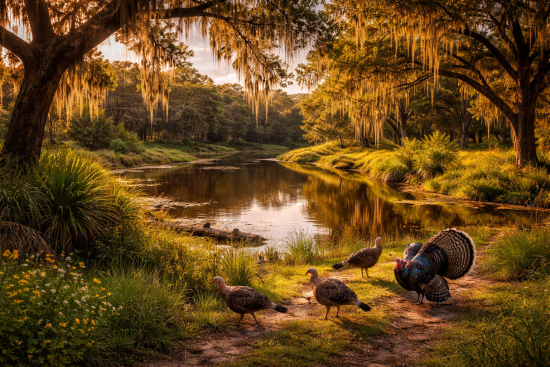
Many buyers purchase land in Putnam County and rural areas of St. Johns County specifically for outdoor recreation. Northeast Florida offers excellent opportunities for hunting, fishing, wildlife observation, and outdoor living.
Large tracts of timberland, wetlands, and agricultural land provide ideal habitat for a variety of game species.
Recreational land may be used for:
hunting
fishing
camping
wildlife habitat management
off-road recreation
nature observation
Common Game Species in Northeast Florida
Several popular game animals are found throughout Putnam and St. Johns Counties.
White-Tailed Deer
White-tailed deer are one of the most commonly hunted species in Florida. Deer hunting season typically runs from fall through winter depending on the hunting zone and weapon type.
Typical habitat includes:
timberland
agricultural fields
mixed hardwood forests
Wild Turkey
Wild turkeys are common in rural and forested areas.
Spring turkey season is particularly popular among hunters.
Turkeys are often found in:
pine forests
open pasture areas
oak hammocks
Feral Hogs
Feral hogs are widespread throughout Florida and can be hunted year-round on private land with landowner permission.
They are commonly found in:
wetlands
agricultural fields
forest edges
Because feral hogs reproduce quickly and can damage crops and land, hunting them also helps with population management.
Small Game
Other species commonly hunted in the region include:
squirrel
rabbit
dove
quail in some areas
Waterfowl Hunting
Some properties with wetlands or ponds may provide opportunities for waterfowl hunting.
Common species include:
wood ducks
teal
mottled ducks
Waterfowl hunting seasons and regulations are managed by federal and state agencies.
Fishing Opportunities
Many properties in Putnam County and nearby areas offer excellent fishing opportunities.
The region is well known for freshwater fishing, particularly in:
the St. Johns River
Crescent Lake
Dunns Creek
Lake George
Common freshwater fish species include:
largemouth bass
crappie (speckled perch)
bluegill
catfish
bream
Private ponds on rural properties can also provide excellent fishing.
Wildlife Habitat on Rural Land
Many rural properties support diverse wildlife populations.
Landowners can improve wildlife habitat by:
maintaining natural vegetation
planting food plots
preserving water sources
creating wildlife corridors
Proper habitat management can increase wildlife populations and improve hunting opportunities.
Hunting Regulations in Florida
Hunting regulations in Florida are managed by the Florida Fish and Wildlife Conservation Commission (FWC).
Hunters must follow rules regarding:
hunting seasons
bag limits
licenses and permits
weapon regulations
Anyone hunting on public land or wildlife management areas must follow additional regulations specific to those areas.
More information about hunting regulations can be found at:
https://myfwc.com
Hunting on Private Property
Hunting is generally allowed on private property in Florida with the permission of the landowner.
However, hunters must still follow all state hunting regulations and licensing requirements.
Landowners may also choose to manage their land specifically for wildlife habitat and recreational hunting.
Timber Value and Forestry Opportunities
Many rural properties in Putnam County and parts of St. Johns County include timberland. Timber can provide both recreational value and potential long-term income.
Common commercial timber species in Northeast Florida include:
Slash pine
Loblolly pine
Longleaf pine
These species are commonly planted and harvested for forest products such as lumber, pulpwood, and plywood.
Timberland is often managed in growth cycles that may range from 15 to 30 years, depending on the species and management practices.
Some landowners periodically harvest timber as an income source while continuing to hold the land for recreational or agricultural use.
Timber Value Considerations
Several factors influence the value of timber on a property:
Tree Species
Certain pine species are more valuable depending on the market demand.
Tree Age and Size
Older trees with larger diameters typically have higher value.
Timber Density
The number of trees per acre affects harvest value.
Access
Properties with good road access are easier and less expensive for logging operations.
Timber Markets
Timber prices fluctuate based on market demand and local mills.
Before purchasing land primarily for timber value, buyers may wish to consult a professional forester who can estimate timber volume and potential harvest value.
Forestry Management
Many landowners actively manage timber stands to improve growth and long-term value.
Common forestry practices include:
thinning timber stands
prescribed burning
invasive species control
replanting harvested areas
Proper management can improve both timber production and wildlife habitat.
Wildlife Management and Land Stewardship
Some landowners actively manage their property to improve wildlife populations.
Common wildlife management practices include:
planting food plots
maintaining timber stands
managing invasive species
protecting wetlands and natural habitat
These practices can enhance both the ecological value and recreational use of rural land.
Recreational Land Value
Properties suitable for hunting, fishing, and outdoor recreation often have strong long-term value.
Features that may increase recreational land value include:
mature timber
water sources such as creeks or ponds
proximity to rivers or lakes
diverse wildlife habitat
good road access
For many buyers, recreational opportunities are an important factor when selecting rural property.
Agricultural Tax Classification (Greenbelt)
Florida offers significant property tax reductions for land used for legitimate agricultural purposes.
This program is commonly called Agricultural Classification or Greenbelt.
Land qualifying for agricultural classification is assessed based on agricultural use rather than market value.
Examples of Qualifying Agricultural Uses
Common uses include:
Cattle operations
Hay production
Nurseries
Crop farming
Timber operations
Applications for agricultural classification are filed with the county property appraiser.
Evaluating Land Using Online Tools
Modern mapping tools allow buyers to evaluate land before visiting a property in person.
These tools can help identify potential opportunities and challenges.
Google Earth
Google Earth is one of the most useful tools for evaluating land remotely.
Buyers can view:
aerial imagery
topography
surrounding land use
nearby water features
road access
Google Earth can also measure property distances and acreage.
This can help buyers visualize the layout of a property and the surrounding landscape.
County GIS Mapping
Both Putnam County and St. Johns County provide online GIS mapping systems that allow users to view detailed property information.
GIS maps often include:
property boundaries
zoning districts
flood zones
aerial photos
parcel ownership data
These tools can help buyers better understand how land is classified and regulated.
FEMA Flood Maps
Flood risk is an important consideration when purchasing land.
The FEMA Map Service Center allows users to review flood zones and determine whether flood insurance may be required.
Flood maps are available at:
https://msc.fema.gov
Evaluating the Surrounding Area
When reviewing land online, buyers should also evaluate nearby properties and land uses.
Consider checking for:
agricultural operations
residential developments
conservation land
nearby roads or highways
power line corridors
Understanding the surrounding area can help buyers anticipate future development and land use patterns.
Using Technology for Preliminary Land Research
Online tools can provide valuable preliminary information, but they should not replace professional due diligence.
Before purchasing land, buyers should still confirm:
zoning regulations
environmental conditions
surveys and boundaries
wetlands delineations
access easements
Working with knowledgeable local professionals can help ensure that land purchases meet a buyer’s goals and expectations.
Final Considerations for Land Buyers
Before purchasing land, buyers should evaluate:
Zoning regulations
Wetlands presence
Flood zones
Soil suitability
Access and easements
Wells and septic systems
Agricultural opportunities
Careful due diligence helps ensure land can support your intended use.
County and Regulatory Resources
Putnam County Planning & Zoning
https://www.putnam-fl.gov
St. Johns County Land Development Code
https://www.sjcfl.us
St. Johns River Water Management District
https://www.sjrwmd.com
Florida Department of Environmental Protection
https://floridadep.gov
FEMA Flood Map Service Center
https://msc.fema.gov